Concepts- Marketing Funnel
Basic marketing theory is the foundation of all advertising, including Google Ads. Marketing can be simplified to the 4 Ps— product, price, place, and promotion. Product describes how you can build your product for marketing purposes. Price is the cost of your products, along with any special offers. Place is where people purchase whether online, over the phone, or in-person. Promotion is the communication vehicle— how you reach them with advertising, marketing, PR, etc. The 4 P’s apply to brand marketing, designed to grow awareness, or direct response, designed to drive people to an action like submitting a form, signing up, or purchasing. The 4 Ps are a good start, but they don’t tell you how to succeed in Google Ads by themselves.
Moving on from the 4 Ps, direct response marketing addresses the stages to buying. One useful concept here is the “marketing funnel,” or the process of funneling people from discovering you to becoming a loyal customer. In each stage you have a responsibility to guide your new customer. A good acronym is aarrr: acquisition, activation, retention, revenue, and referral. In acquisition you reach prospective customers. In activation, you drive them to take a purchase action. Retention occurs when you keep customers buying or engaged. Revenue is the stage where you accrue your money, of course. In the last step, referral, your customers refer new customers.
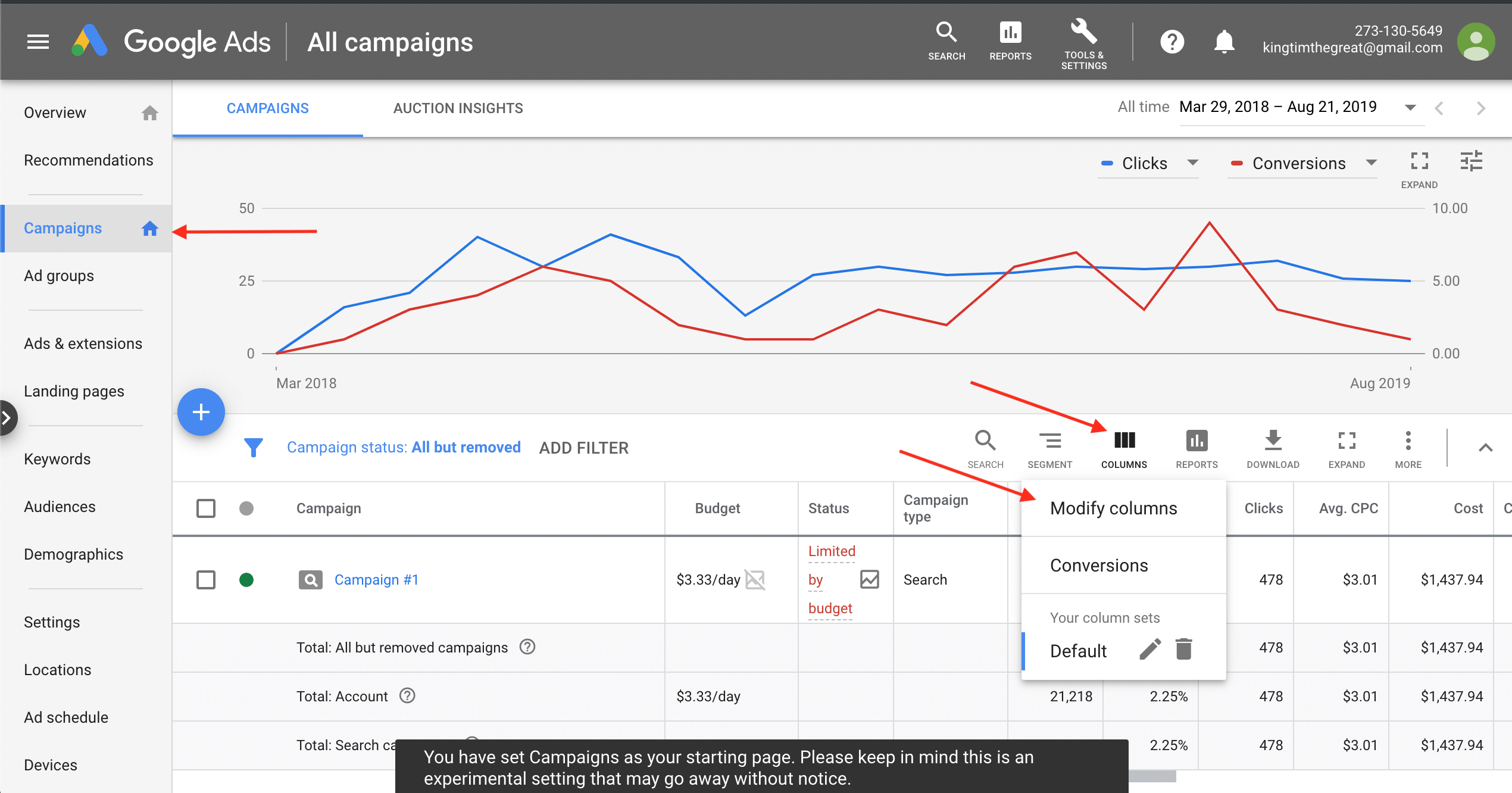
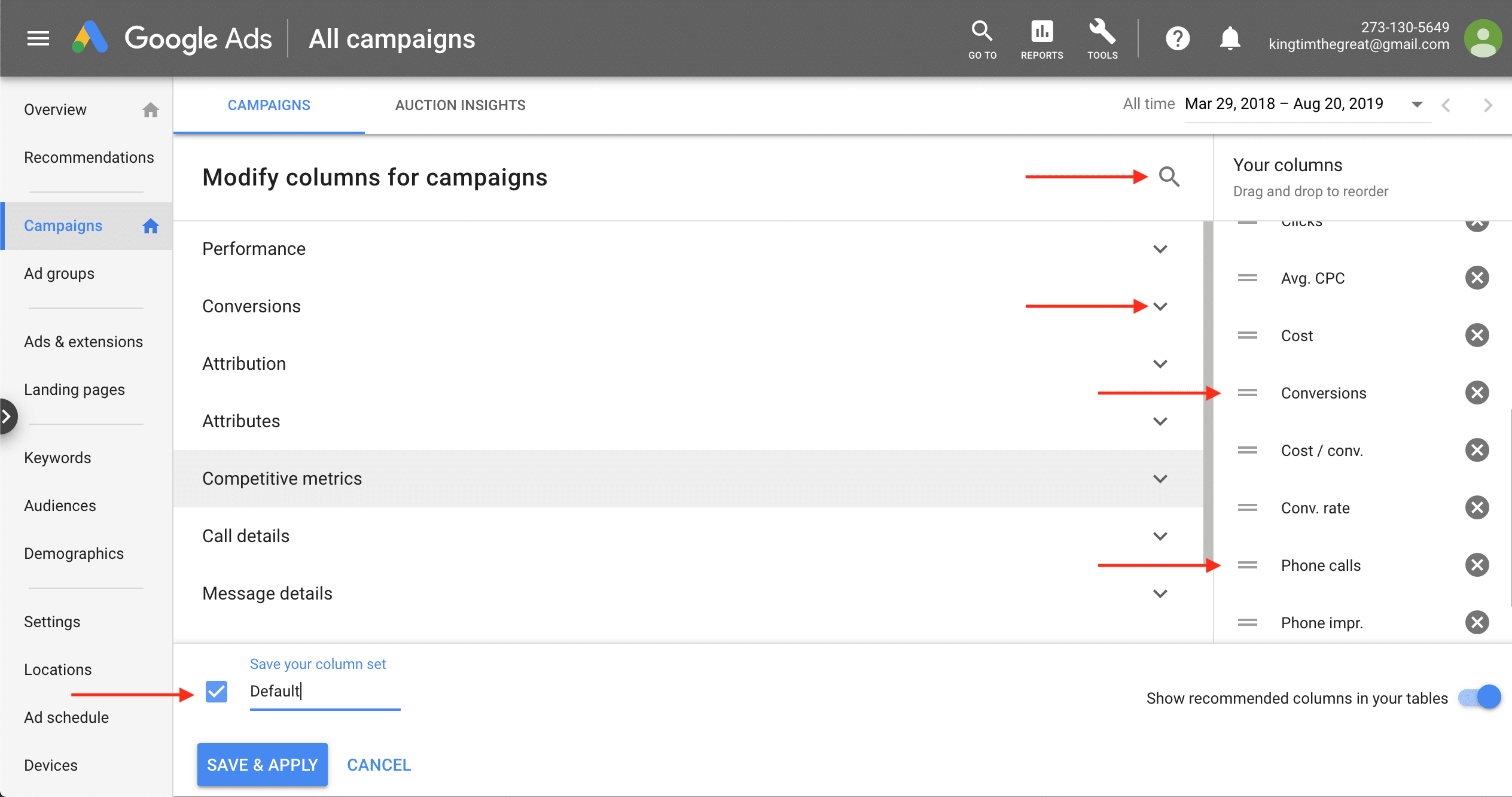
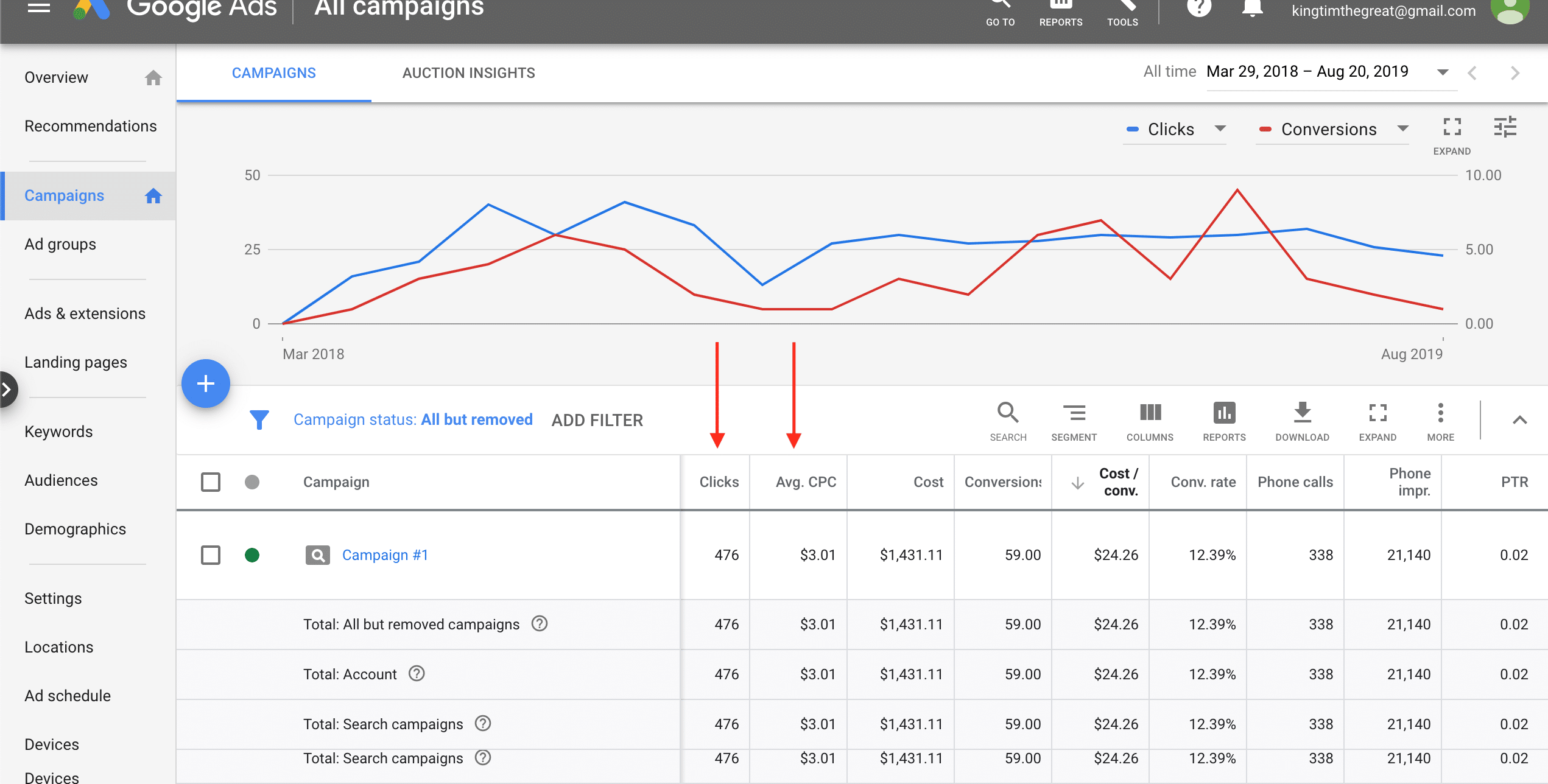
When using Google Ads for direct response you should measure results at each stage of the funnel to monitor progress. At the top are impressions: the number of people who saw your ads. Some percentage of these people choose to click your ads. Of them, some percentage choose to take a purchase action with your business called a conversion. You can use that basic list to calculate certain response rates: the clickthrough rate (CTR), the percentage of people who saw your ads and decided to click, and the conversion rate (CVR), the percentage of people who saw your offer and decided to take action. Different businesses count different conversions– an ecommerce store may capture leads, in the form of email addresses to send email marketing to, and a real estate agent may capture full names, phone numbers, and email addresses from sales leads interested in buying a home. Other businesses want to drive direct purchases, and that same ecommerce store may also drive purchases as conversions. Which conversions you track depends on your business model– a publication might make ad revenue from non-customer leads seeing their free content but also make money off of purchases of their paid publications, so they may prioritize leads or sales or both. Google Ads even has an option to run call-only ads and drive phone calls as conversions. In the Instructions tab on this page you’ll find a tutorial on how to add columns to the Google Ads results table. This allows you to track results leading to conversion, but after that it’s up to you to maximize lifetime value from the conversions you get.
Consider these axioms about the marketing funnel. First, you will never drive 100% of people who see your ads to action. Second, you may have to incentivize people to purchase. Third, people make many purchasing decisions emotionally rather than logically… CEOs and hobbyists alike. Fourth, and perhaps most important, a campaign can be sustained forever if it is ROI positive.
This isn’t too complicated, but applying these lessons is a career for thousands of marketers around the world. Luckily, to succeed on Google Ads you don’t have to be the perfect advertiser; you just need to set real performance goals and complete the tasks that achieve them. You can do it, and we’re here to help.